
The Three Phases of a Kitchen Renovation
Nobody plans a kitchen renovation. They endure one. The project takes twice as long as quoted, costs 20% more than budgeted, and involves at least one moment where you're washing dishes in the bathtub. That's normal. Here's how to keep the chaos manageable.
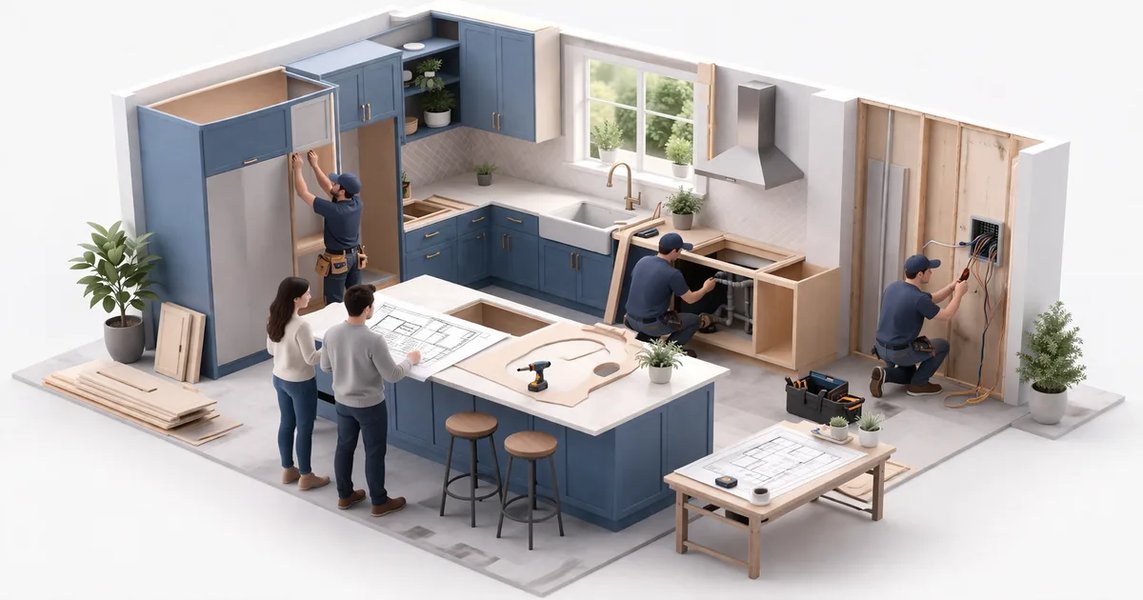
The three phases of a kitchen renovation: excitement, denial, and eating takeout on a folding table for three months.
A kitchen gut-job in Ottawa typically runs 8 to 16 weeks and costs between $25,000 and $75,000 depending on scope. It's the most expensive room in your house to renovate, the one with the most overlapping trades, and the one where a single miscalculation on plumbing or electrical can stall the entire project for weeks.
But it's also the room with the best return on investment. In Ottawa's real estate market, a well-executed mid-range kitchen renovation recovers 75 to 100 percent of its cost at resale. The keyword there is "well-executed." A rushed kitchen renovation doesn't just cost more. It shows.

Budget Reality: Three Tiers of Kitchen Renovation
Before you start browsing countertop samples, you need an honest conversation with your bank account. Kitchen renovations in Ottawa fall into three broad categories, and the gap between them is enormous.
Cosmetic Refresh: $8,000 to $15,000
You're keeping the existing layout. No walls move, no plumbing moves, no electrical panels get touched. This means painting or refacing cabinets, new hardware, updated light fixtures, a new backsplash, and maybe replacing the countertops. You might swap out a faucet or add under-cabinet lighting. The bones stay exactly where they are.
This is the sweet spot for homes where the kitchen layout already works but the finishes look like they're from 2003. You can do most of this in 2 to 4 weeks with minimal disruption.
Mid-Range Renovation: $25,000 to $50,000
Now you're replacing cabinets, countertops, flooring, and appliances. You might move a light fixture, add a few outlets, or upgrade the sink plumbing. The layout stays mostly the same, but the room gets a complete material overhaul.
This tier is where most Ottawa homeowners land. It's enough to transform the room without the structural complexity of moving walls or rerouting major plumbing lines. Timeline: 6 to 10 weeks.
Full Gut Renovation: $50,000 to $75,000+
Everything comes out. Cabinets, flooring, drywall, possibly walls. You're redesigning the layout, moving plumbing, upgrading electrical, maybe knocking out a wall to create an open concept. This is the tier where you need an electrician, a plumber, possibly a structural engineer, and definitely more patience than you think you have.
In Ottawa's century homes, particularly in the Glebe, Old Ottawa South, and Westboro, full gut renovations routinely hit the higher end because of what you find behind the walls. More on that below.
What Drives Kitchen Costs Through the Roof
The single most expensive decision in a kitchen renovation isn't the countertop material. It's whether you move things.
Moving Plumbing
Relocating a sink to a different wall or adding a pot filler above the stove means rerouting drain, waste, and vent pipes. In a single-storey home or a main-floor kitchen, this might mean cutting into the basement ceiling. In a condo or second floor, it gets more creative and more expensive. Budget $3,000 to $8,000 just for the plumbing relocation, not counting the patching and finishing work.
Moving Electrical
Ontario requires an ESA (Electrical Safety Authority) permit for new circuit work. If you're adding an island with outlets, moving your range from one wall to another, or upgrading to an induction cooktop that needs a 50-amp circuit, an electrician needs to pull permits and get inspections. This is one area where people chronically cut corners, and it's one area where cutting corners can burn your house down.
Structural Wall Removal
The "open concept" request is the most common in Ottawa kitchen renovations, and the most commonly underestimated. If the wall between your kitchen and dining room is load-bearing, and in most Ottawa homes built before 1980 it is, removing it requires a structural engineer's assessment and a properly spec'd beam. This adds $5,000 to $15,000 depending on span length and what's above.
Here's the part nobody mentions until the invoice arrives: once you remove a wall, you need to match the flooring, patch the ceiling, and deal with the transitions. That "simple" wall removal cascades into flooring, drywall, and paint costs that weren't in the original quote.
Custom Cabinetry vs. Stock
Stock cabinets from a big-box store run $5,000 to $12,000 for a standard kitchen. Semi-custom from a Canadian manufacturer runs $12,000 to $25,000. Fully custom from a local shop like Deslaurier, an Ottawa-area manufacturer with a solid reputation, can run $20,000 to $40,000 or more.
The price difference isn't just about materials. Custom cabinets are built to fit your exact dimensions, which matters a lot in century homes where nothing is square and nothing is level. Stock cabinets in a 1920s Glebe kitchen will have gaps. Count on it.
The Timeline Nobody Believes
A full kitchen renovation in Ottawa takes 8 to 16 weeks. Not 4 weeks. Not "about a month." Eight to sixteen weeks from demolition to cooking your first meal.
Here's why it takes that long:
- Week 1-2: Demolition and rough-in. The exciting part. Everything comes out fast.
- Week 3-4: Electrical and plumbing rough-in. Waiting for ESA inspection.
- Week 5-6: Drywall, mudding, sanding, priming.
- Week 7-9: Cabinet installation. This is where delays happen. Cabinets ordered in Ottawa typically take 4 to 8 weeks to arrive, which means you need to order them before demolition starts.
- Week 9-11: Countertop templating and installation. The templater can't come until cabinets are in. Then fabrication takes 2 to 3 weeks.
- Week 11-13: Backsplash, plumbing hook-ups, appliance installation, trim.
- Week 13-16: Touch-ups, punch list, final inspections.
The critical bottleneck is cabinets. If you haven't ordered them 6 to 8 weeks before demolition day, you'll have a gutted kitchen sitting empty while you wait. Set up a temporary cooking station in the basement or living room: a folding table, a microwave, a hot plate, and a good attitude. You'll need all four.
The Five Mistakes That Blow Up Kitchen Budgets
1. Choosing Finishes Before Confirming Layout
People fall in love with a specific tile or countertop, then discover it doesn't work with the electrical layout or the cabinet dimensions their budget allows. Start with the floor plan. Lock in where the sink, range, and fridge go. Then pick finishes.
2. Not Getting Multiple Quotes
Kitchen renovations have enormous price variation between contractors. A $45,000 quote and a $62,000 quote for the same scope are not unusual in Ottawa. Get three written quotes minimum. Compare line by line, not just the bottom number.
3. Skipping the Electrician
Most Ottawa kitchens built before 2000 don't have enough circuits for modern appliances. An induction range needs a dedicated 50-amp circuit. A dishwasher needs its own circuit. A microwave needs its own circuit. Under-cabinet lights, island outlets, and the garburator all need to be wired properly. If your kitchen is on a 60-amp panel, which many older Ottawa homes still have, you may need a panel upgrade ($2,000 to $4,000) before you can even power your new appliances.
4. Forgetting the 20% Contingency
Every kitchen renovation finds something unexpected. Especially in Ottawa, where century homes in Sandy Hill, Centretown, and the Glebe hide surprises behind every wall. Knob-and-tube wiring. Asbestos in floor tile adhesive. Plumbing runs that defy explanation. Build 20% into your budget for the stuff you can't predict.
5. Hiring One Contractor for Everything
A general contractor who does their own electrical and plumbing is a red flag. Licensed electricians and licensed plumbers should handle those portions. A good GC coordinates the trades. A questionable GC tries to be all of them.
Ottawa-Specific Kitchen Realities
If your Ottawa home was built before 1960, your kitchen renovation has a few extra considerations that a homeowner in Barrhaven won't face.
Plaster Walls
Century homes in the Glebe, Sandy Hill, Old Ottawa South, and New Edinburgh have lath-and-plaster walls, not drywall. Plaster is harder, heavier, and messier to remove. It also means you can't just cut a hole to run new wiring. Budget extra for wall work in pre-war homes.
Oddball Plumbing
Older Ottawa homes may have galvanized steel supply lines, cast iron drains, and plumbing configurations that were creative solutions to problems that no longer exist. If you're touching the plumbing in a century home, expect the plumber to find at least one thing that makes them pause and say "huh."
Undersized Electrical Panels
A 60-amp panel was fine when your kitchen had a gas stove and a toaster. It's not fine when you're adding an induction range, a dishwasher, a microwave on its own circuit, and six recessed LED lights. The panel upgrade should happen early in the project, not as a surprise at the end.
Load-Bearing Walls in Unexpected Places
Ottawa's heritage homes were built with structural logic that doesn't always match modern open-concept preferences. The wall between the kitchen and the dining room in a 1920s home is frequently load-bearing. So is the wall between the kitchen and the back porch that got enclosed in 1975. Before you commit to an open floor plan, pay a structural engineer $500 to $1,000 to confirm what can and can't come down.
Worth knowing: Kitchen renovations in Ottawa require a building permit if you're removing walls, moving plumbing, or changing the electrical panel. Cosmetic refreshes (paint, hardware, countertops) don't need permits. Check with the City of Ottawa's building services department if you're unsure.
Making the Investment Count
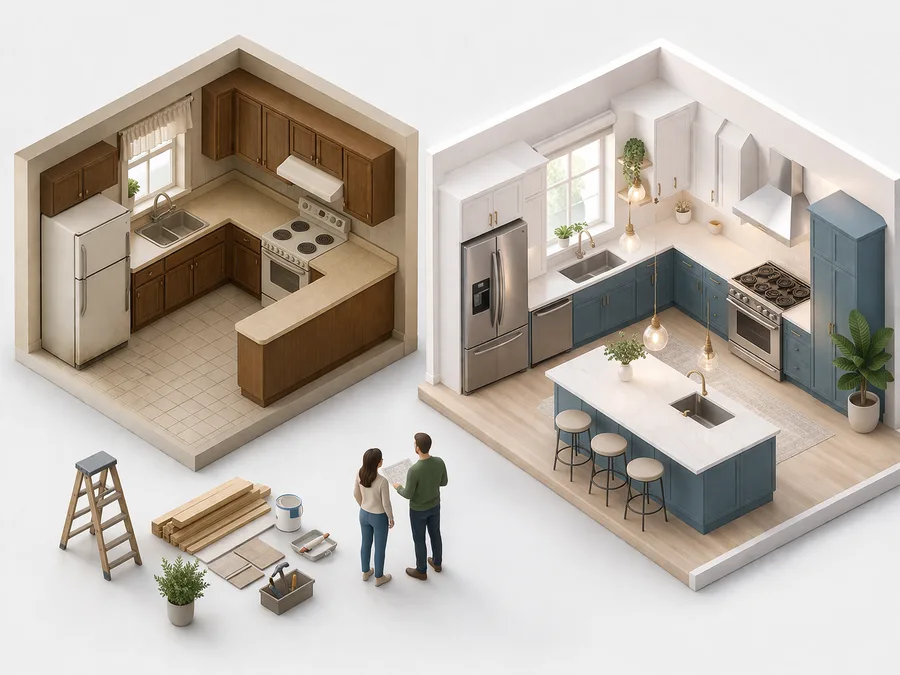
The best kitchen renovations in Ottawa share three traits: the homeowner planned the layout before picking finishes, the trades were licensed and permitted, and someone had the discipline to say "that's outside the budget" at least twice during the project.
Start with a realistic budget tier. Order cabinets early. Hire a licensed electrician. Get three quotes. And set up that temporary kitchen before demolition day, because the folding table in the living room is going to be your best friend for a while.
The version of your kitchen you're imagining right now? It exists. It just takes a plan, the right tradespeople, and the willingness to eat a lot of takeout in the meantime.