
The Most Awkward Conversation in Suburban Ottawa
The fence conversation is the most awkward discussion in suburban Ottawa. You want privacy. Your neighbour wants to keep their view. Someone's dog keeps getting into someone else's garden. And underneath it all, nobody is 100% sure where the property line actually is.
This is how fence disputes start. Not with anger, but with assumptions. You assume the old fence is on the property line. Your neighbour assumes you'll split the cost. The city assumes you checked the bylaw. Nobody checked anything.
Property line disputes have ended more Ottawa friendships than the Senators' playoff record. At least with the Sens, everyone suffers equally.
Here's everything you need to know before you call a fencing contractor, talk to your neighbour, or start Googling "fence bylaw Ottawa" at midnight.
Ottawa's Fence Bylaws: What You Can and Can't Build
Ottawa's fence regulations are straightforward once you know them. The confusion comes from people not looking them up before they build.
Maximum Heights
- Rear and side yards: 2 metres (about 6.5 feet). This is the standard privacy fence height and covers most residential situations.
- Front yards: 1 metre (about 3.3 feet). The city wants sight lines preserved for pedestrians and drivers. This is why you see short decorative fences or hedges in front yards, not 6-foot privacy walls.
- Corner lots: The 1-metre limit applies to any yard that faces a street, not just the "front." Corner lot owners often discover this after they've already bought materials.
Permit Requirements
Under 2 metres? No building permit required. This covers the vast majority of residential fences. But "no permit" does not mean "no rules." You still have to comply with height limits, setback requirements, and material restrictions.
Heritage District Restrictions
If you live in a heritage conservation district like parts of the Glebe, Sandy Hill, Lowertown, or New Edinburgh, the rules change. Heritage districts can restrict fence materials, styles, and even colours. That modern horizontal slat fence you found on Pinterest? The heritage committee might have opinions about it. Check with the City before ordering materials.
The pattern here is simple: know the rules before you spend money. A 10-minute call to 311 is cheaper than rebuilding a fence that violates the bylaw.
Know Your Property Line (Before Your Neighbour Teaches You)
This is where most fence disputes originate. Not the height, not the style, not the cost. The line.
Many Ottawa homeowners assume the existing fence marks the property boundary. It often doesn't. Fences shift over decades. Previous owners eyeballed the placement. Some fences were deliberately set back from the property line and the next owner assumed they were on it.
Why a Survey Matters
An Ontario Land Surveyor can locate and mark your exact property boundaries. In Ottawa, this typically costs $500 to $1,500 depending on lot size, complexity, and whether the original survey pins are still findable.
That sounds expensive until you compare it to the alternative. A fence built 6 inches over the property line can result in a forced removal, legal fees, and a relationship with your neighbour that involves lawyers instead of barbecue invitations. Property line lawsuits in Ontario routinely cost $15,000 or more. A survey is insurance against that.
Finding Your Survey
Before paying for a new one, check your closing documents from when you bought the house. Many purchases include an existing survey or a reference plan. You can also search the Ontario Land Registry for your property's registered plan. If you find iron survey pins at your lot corners (small metal stakes flush with the ground), you may be able to measure from those.
But if there's any ambiguity, any disagreement, or any significant money involved, get a fresh survey. Period.
Sharing Costs with Neighbours: It's a Conversation, Not a Right
This is the part that surprises people. Ontario has no law requiring your neighbour to pay for half of a shared fence. None. Zero. The idea that neighbours automatically split fence costs is a persistent myth that has fuelled arguments across every Ottawa suburb since the city amalgamated.
Some municipalities in Ontario have enacted fence-viewing bylaws under the Line Fences Act, which can compel cost sharing in specific circumstances. But it's a formal process involving fence-viewers appointed by the municipality, and it's neither quick nor guaranteed to go your way.
The Better Approach
Talk to your neighbour before you start planning. Not after you've picked the materials, not after you've gotten a quote, and definitely not after you've installed the fence and handed them an invoice.
- Start the conversation early. "We're thinking about replacing the fence. What do you think?" opens a dialogue. "Here's your half of the bill" starts a war.
- Agree on materials and style together. If your neighbour is contributing, they should have input.
- Get the agreement in writing. Even a simple email confirmation works. "Just confirming we agreed to split the cost of the cedar fence 50/50, estimated at $X." This protects both of you.
- If they say no, build on your side. You can build a fence entirely on your property without your neighbour's permission or financial participation. The finished side traditionally faces out, but that's courtesy, not law.
The goal is a fence, not a feud. Five minutes of conversation now prevents five years of passive-aggressive hedge trimming.
Material Options for Ottawa's Climate
Ottawa's weather tests every material. You need something that handles -30C in January, +35C with humidity in July, spring freeze-thaw cycles, ice storms, and the occasional wind event that reminds you nature doesn't care about your property improvements.
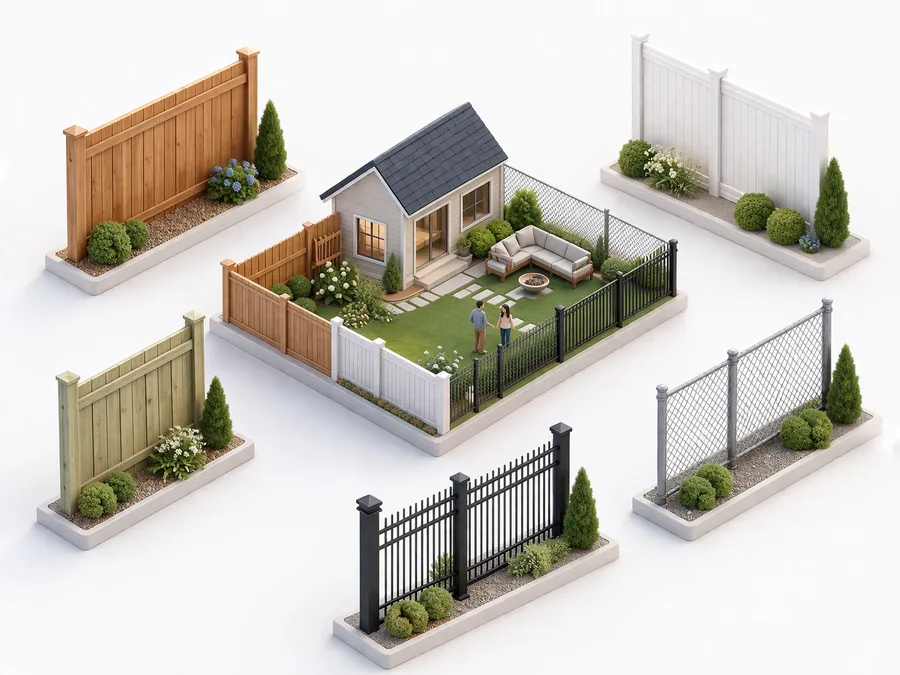
Pressure-Treated Wood
Cost: $40 to $80 per linear foot installed.
Lifespan: 15 to 20 years with maintenance.
The workhorse of Ottawa fencing. Affordable, widely available, and every fence contractor in the city knows how to work with it. The trade-off is maintenance: pressure-treated wood should be stained or sealed every 1 to 2 years, and it will eventually grey, warp, or split if neglected. Most common choice in Kanata, Barrhaven, and Orleans.
Cedar
Cost: $50 to $100 per linear foot installed.
Lifespan: 20 to 25 years.
Beautiful grain, naturally rot-resistant, and it smells incredible for the first summer. Cedar weathers to a silver-grey that many people find attractive, or you can stain it to maintain the original colour. Popular in the Glebe, Westboro, and Old Ottawa South where aesthetics matter as much as function. Costs more upfront but requires less chemical treatment than pressure-treated wood.
Vinyl (PVC)
Cost: $50 to $90 per linear foot installed.
Lifespan: 20 to 30 years.
Zero maintenance is the selling point. No painting, no staining, no rot. The downside: vinyl can become brittle in extreme cold. Ottawa's -30C stretches push some vinyl products to their limits, and a hard impact on a cold day can crack panels that would flex in milder climates. If you go vinyl, buy a product rated for Canadian winters, not the cheapest option from a big-box store.
Chain Link
Cost: $25 to $50 per linear foot installed.
Lifespan: 25+ years.
The most affordable option and practically indestructible. Chain link fences don't care about Ottawa weather. They don't provide privacy (unless you add slats or screening), but if your goal is keeping kids or dogs contained without breaking the budget, chain link does the job. Common throughout suburban Ottawa, especially in back yards.
Black Aluminum / Ornamental
Cost: $60 to $120 per linear foot installed.
Lifespan: 30+ years.
Essentially zero maintenance. Won't rust, won't rot, won't fade. Aluminum fencing gives you a clean, modern or classic wrought-iron look without any upkeep. The big advantage beyond aesthetics: aluminum fencing is pool code compliant when specified correctly, with self-closing and self-latching gate options built into the product line.
The Leda Clay Problem: Why Ottawa Fences Lean
Drive through any established Ottawa neighbourhood in spring and you'll see it: fences leaning 10, 15, 20 degrees off vertical. Posts that were straight last fall are now doing their best impression of the Leaning Tower of Pisa.
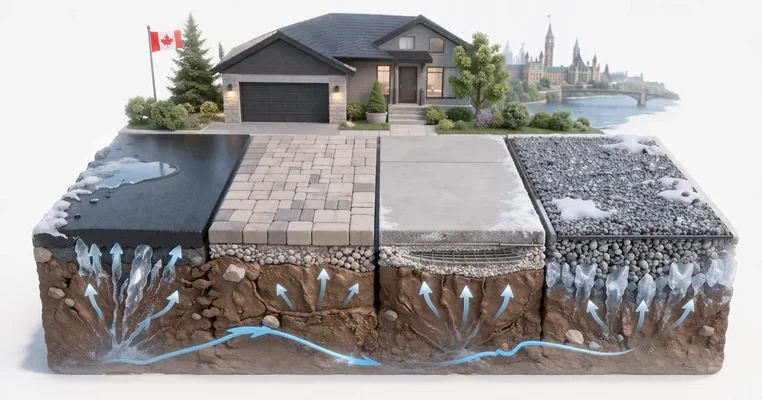
This is Ottawa's Leda clay at work. The marine clay that sits under much of the city expands when it absorbs water and contracts when it dries. In winter, the freeze-thaw cycle amplifies this movement. Posts that aren't set deep enough get pushed upward and sideways by frost heave, and they never go back to where they started.
The Fix: Depth and Concrete
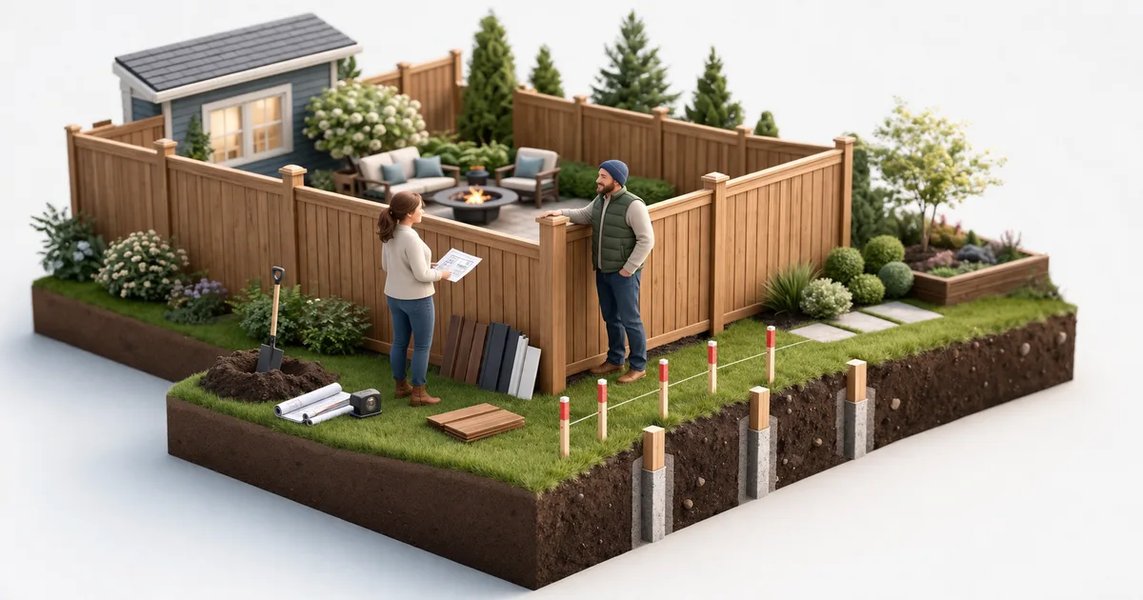
In Ottawa, fence posts must be set below the frost line, which is approximately 4 feet (1.2 metres) deep. This is non-negotiable if you want a fence that stays vertical.
- Dig to 4 feet minimum. Yes, this is deeper than many online guides suggest. Those guides aren't written for cities with Leda clay and -30C winters.
- Set posts in concrete. Pour concrete around the post in the hole, not just pack dirt. A properly set post in concrete resists the lateral forces that clay exerts during freeze-thaw cycles.
- Use gravel at the base. A few inches of gravel below the concrete allows water to drain away from the post bottom, reducing the moisture that drives frost heave.
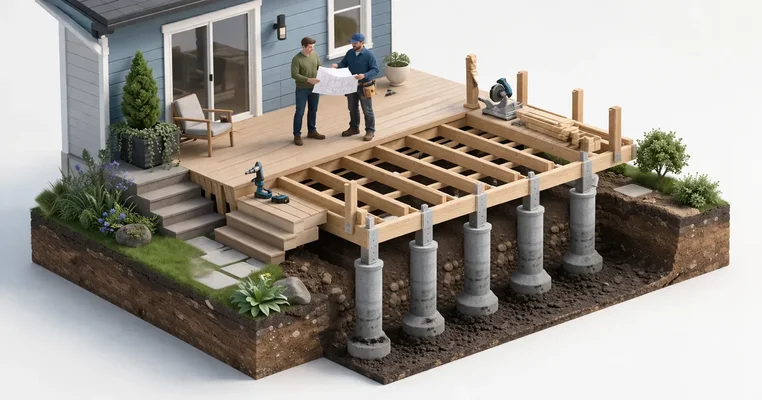
- Consider steel post anchors for wooden fences. The metal anchor goes into the concrete, and the wooden post bolts to the anchor above grade. This keeps the wood out of contact with the ground and makes future post replacement dramatically easier.
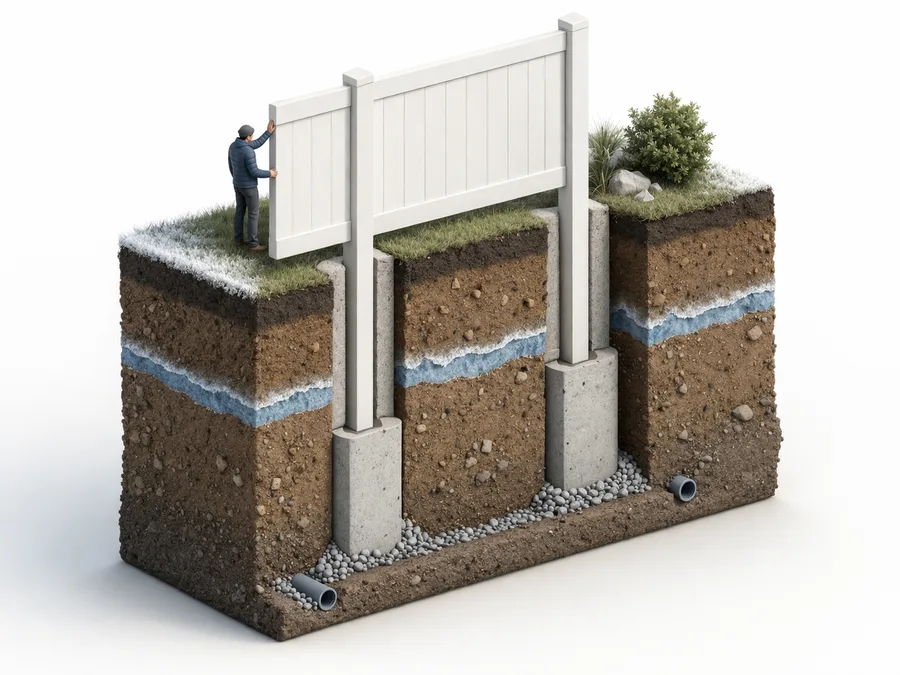
Shallow posts are the number one cause of leaning fences in Ottawa. Every spring, fence companies make a significant portion of their revenue fixing fences that were installed with 2-foot post holes. You can pay for proper installation once, or pay for repairs repeatedly. The math is straightforward.
Pool Fence Requirements: Not Optional
If you have a swimming pool in Ottawa, your fence requirements go well beyond aesthetics and privacy. Ottawa follows the Ontario Building Code, and pool enclosure rules exist for one reason: preventing drownings.
- Minimum height: 1.5 metres (about 5 feet) around the pool enclosure.
- Self-closing, self-latching gates that open outward (away from the pool). The latch must be at least 1.5 metres from grade or have a child-resistant mechanism.
- No climbable elements within 1 metre of the fence on the outside. Horizontal rails, nearby trees, deck furniture, and stored items can all create climbing opportunities.
- No openings large enough for a sphere 100mm (about 4 inches) in diameter to pass through.
Non-compliance is not just a fine. If someone, especially a child, accesses your pool through an inadequate enclosure and is injured, your homeowner's insurance may deny the claim entirely. Your insurer likely requires a compliant pool fence as a condition of your policy. Check your policy wording and check it now.
Black aluminum fencing is popular for pool enclosures because it meets code requirements out of the box, doesn't obstruct views of the pool (so you can supervise from the house), and never needs maintenance.
When to Install: Timing and Booking
Ottawa's installation season follows the ground conditions.
- Best time: late May through September. The ground is fully thawed, digging is straightforward, and concrete cures properly in warm temperatures. Most fence contractors are busiest in June and July, so booking in early spring for a late May install gives you the best selection of contractors.
- Fall (October to mid-November) works well. Contractors are less booked, you might negotiate better pricing, and the ground is still workable. Concrete needs to cure before hard freeze, so earlier in fall is better.
- Winter installation is technically possible but costs 20% to 40% more. Frozen ground requires specialized equipment to dig post holes, and concrete requires additives or heated enclosures to cure in sub-zero temperatures. Unless you have a specific reason, wait for spring.
One practical tip: if your fence project is part of a larger backyard renovation (patio, landscaping, drainage), coordinate the fence installation with the other work. Heavy equipment for landscaping can damage a new fence, and trenching for drainage can undermine fresh post holes. Plan the sequence, not just the individual projects.
The 30-Second Decision Framework
Before you start any fence project in Ottawa, answer these five questions in order:
- Where exactly is your property line? If you're not sure, get a survey.
- Does your location have special restrictions? Heritage district, corner lot, proximity to a street.
- Have you talked to your neighbour? Even if you're paying for everything yourself, a conversation prevents conflict.
- Are posts going 4 feet deep in concrete? If your quote describes anything shallower, find a different contractor.
- Do you have a pool or plan to add one? Pool fencing requirements affect material choice and gate configuration.
A fence is one of the simpler home improvement projects. The materials are well understood, the installation is relatively quick (most residential fences take 1 to 3 days), and the result is immediate. The only complicated part is the human element: property lines, neighbour relationships, and municipal rules.
Handle the people and paperwork first. The fence itself is the easy part.