
It starts with one ant on the kitchen counter in April. You squish it. Then there are three more. Then you find a small pile of what looks like sawdust near the basement window frame. Congratulations: you have carpenter ants, and they've been living in your walls rent-free since last summer.
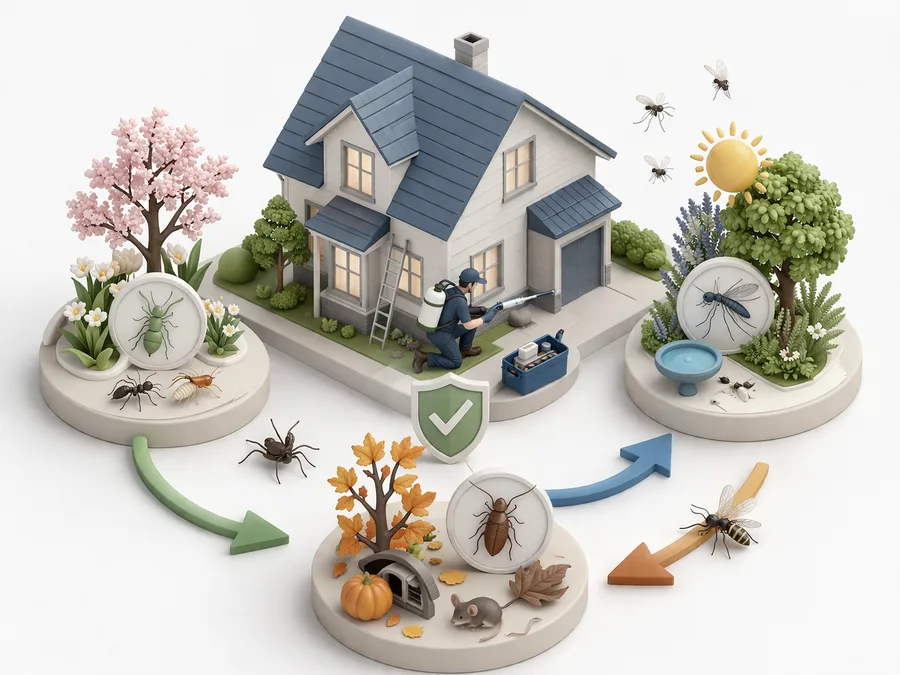
Ottawa's climate creates a predictable rotation of household pests. Carpenter ants in spring. Wasps in summer. Mice in fall. Each one follows a schedule as reliable as a bus timetable, except they actually show up on time.
This guide covers the major pests Ottawa homeowners deal with, when they show up, what they cost to remove, and the honest line between DIY and calling a professional. Because squishing one ant on the counter is fine. Finding frass in your structural framing is not a DIY situation.
Carpenter Ants: Ottawa's Number One Structural Pest
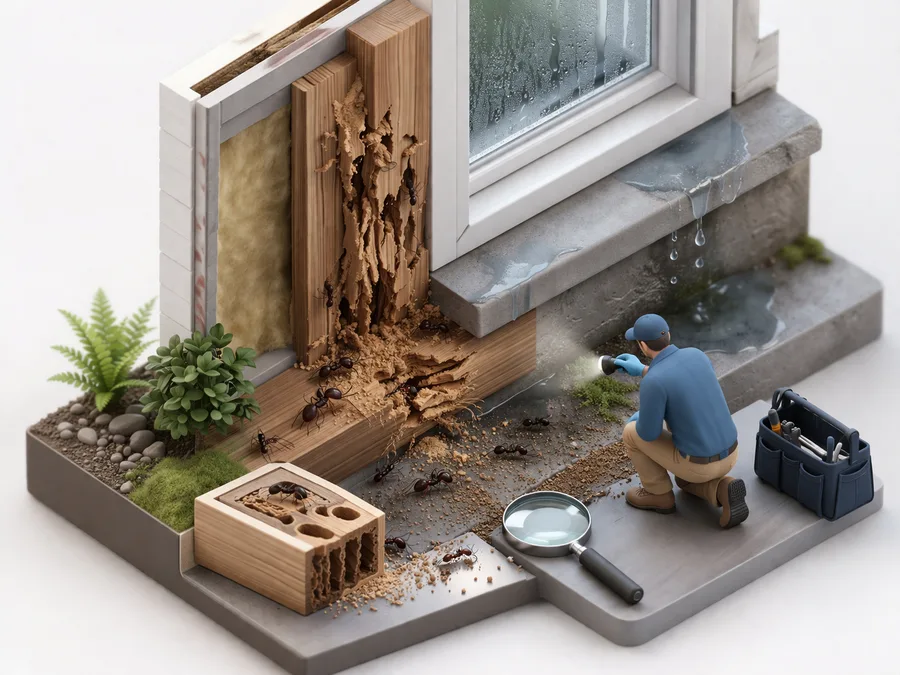
Carpenter ants are the pest that Ottawa homeowners fear most, and for good reason. Unlike termites (which are extremely rare this far north), carpenter ants are everywhere. They don't eat wood. They excavate it. They chew through softened or moisture-damaged lumber to create smooth, gallery-like tunnels for nesting. The sawdust they leave behind is called frass, and finding it near structural wood is the pest equivalent of a check engine light.
Why Ottawa Homes Are Perfect Targets
Carpenter ants need two things: moisture and wood. Ottawa provides both in abundance. Our long winters create ice dams that leak into roof sheathing. Spring thaw saturates basement walls. Humid summers keep crawl spaces damp. Any wood that stays moist for extended periods becomes an invitation.
Common nesting locations in Ottawa homes:
- Basement floor joists (especially near the sill plate where moisture wicks up from the foundation)
- Window frames with failed caulking or condensation damage
- Deck posts and beams where wood contacts soil
- Roof areas damaged by ice dams
- Behind bathroom walls where plumbing sweats
The Warning Signs
Small piles of fine, wood-coloured sawdust (frass) near baseboards, window sills, or structural beams are the primary indicator. The frass is clean and fibrous, almost like pencil shavings. If you tap the wood above the frass pile and it sounds hollow, the colony has been working for a while.
Seeing large black ants (10-15mm) indoors during winter is another sign. Carpenter ants are dormant in cold weather, so active ants inside your heated home in January mean the nest is inside the building, not outside.
The most alarming sign: winged carpenter ants (swarmers) emerging indoors, typically in April or May. If you see ants with wings inside your house, you have an established, mature colony. Colonies need 3-5 years to produce swarmers. They've been in your walls for a long time.
Treatment: What Works and What Doesn't
DIY bait stations from the hardware store work for minor foraging activity. A few ants in the kitchen that came in from outside? Bait stations can handle that. But once you find frass near structural wood or see swarmers indoors, you're past the DIY threshold.
Professional treatment typically involves:
- Targeted treatment: $300 to $600. The technician locates the nest (or nests, since carpenter ants often maintain satellite colonies) and applies product directly.
- Full perimeter barrier treatment: $800 to $1,500+. Creates a chemical barrier around the home's exterior, treating known and potential entry points. This is the standard approach when the colony location isn't obvious.
The reason DIY often fails for established colonies: the nest is typically inside a wall cavity, beneath insulation, or deep in a floor joist. You can't reach it with a spray can. You can't see it without opening a wall. Professional technicians use injectable products and dust formulations designed to reach into voids where the colony actually lives.
Prevention is cheaper than treatment: Fix moisture problems first. Repair leaking windows. Ensure proper grading around your foundation so water flows away from the house. Remove any wood-to-soil contact (firewood stacked against the house, garden ties touching the siding). Carpenter ants go where the moisture is. Eliminate the moisture, and they go elsewhere.
The October Mouse Migration
Every fall, as nights drop below 10C, field mice evaluate their housing options. Your home is warm, has food, and has at least three entry points you don't know about. Mice have a remarkable talent for finding the one gap in your foundation you forgot about. They're like tiny, furry building inspectors, except they don't leave a report. They leave droppings.
A mouse can squeeze through any opening it can fit its skull through. That's a gap the diameter of a dime. About 6mm. Your home has dozens of potential entry points this size: where pipes enter the foundation, where the dryer vent exits, around the garage door seal, where the gas line comes through the wall, and along the sill plate where it meets the foundation.
Signs You Have Mice
- Small, dark droppings (rice-grain sized) in cabinets, drawers, or along baseboards
- Scratching or scurrying sounds in walls or ceilings, usually at night
- Gnaw marks on food packaging, cardboard, or electrical wires
- A musty, ammonia-like smell in enclosed spaces (heavy infestations)
What Actually Works
Snap traps are more effective and more humane than glue traps. Peanut butter is a better bait than cheese (despite what cartoons taught you). Set traps perpendicular to walls with the trigger facing the baseboard, since mice travel along edges.
Poison bait stations work but carry risks. A poisoned mouse can be eaten by a pet or die inside a wall cavity where you can't reach it. If you have children or pets, tamper-resistant bait stations used by professionals are much safer than anything sold retail.
Exclusion is the real solution. Sealing entry points is more effective than trapping because it addresses the cause, not the symptom. A professional exclusion service runs $300 to $800 and involves a thorough inspection and sealing of every gap, crack, and opening using steel wool, caulk, metal flashing, and hardware cloth. One round of professional exclusion often lasts years.
Trapping without exclusion is an annual subscription to the same problem. You'll catch mice every October forever. Seal the gaps, and next October the mice find a different house.
The Ottawa Pest Calendar: What Shows Up When
Ottawa's pests follow the temperature. Once you know the pattern, you can prepare before they arrive instead of reacting after they've moved in.
March - April: The Wake-Up
- Carpenter ants emerge from dormancy as temperatures rise above 0C. Foraging activity increases rapidly.
- Cluster flies appear on warm window sills. They overwintered in your attic or wall voids and are heading for the exits. They're harmless but annoying. Vacuuming is the most effective response.
May - June: Swarm Season
- Carpenter ant swarmers (winged reproductives) emerge from mature colonies. This is the season when homeowners discover they've had a colony for years.
- Wasps begin building new nests. Queens that overwintered start colonies in sheltered spots: under eaves, inside soffit gaps, in playground equipment. The nests are tiny and easy to remove now. By August, they won't be.
July - August: Peak Activity
- Wasps hit peak colony size. Nests can contain hundreds to thousands of individuals. Late summer is when they're most aggressive because they're defending a large colony and natural food sources are declining.
- Mosquitoes peak. Ottawa's proximity to the Ottawa River and Rideau Canal, combined with Leda clay's poor drainage, creates ideal breeding conditions.
- Earwigs appear in basements, garages, and mulch beds. Creepy looking, mostly harmless, attracted to moisture.
September - October: The Migration Indoors
- Mice begin seeking indoor shelter as temperatures drop. This is the month to seal entry points, not November when they're already inside.
- Wasp nests reach maximum size. Colonies become aggressive as they prepare to die off. Only the new queens survive winter, hibernating in protected spots. The rest freeze.
- Stink bugs and boxelder bugs cluster on sun-warmed exterior walls, seeking cracks to enter for winter.
November - February: Indoor Season
- Mice are your primary concern. If they got in during fall, they're breeding. A single pair of mice can produce 5-10 litters per year.
- Stored product moths (pantry moths) may appear in flour, rice, or cereal. Inspect dry goods and discard anything with webbing.
- Outdoor pests are dormant or dead. This is the season to focus on exclusion and prevention for next year.
Bed Bugs: The Urban Problem
Bed bugs aren't a seasonal pest. They don't care about weather. They care about proximity to sleeping humans, which is why multi-unit residential buildings in denser Ottawa neighbourhoods (Sandy Hill, Centretown, Hintonburg) see the highest rates.
Bed bugs are not a cleanliness issue. They hitchhike on luggage, clothing, and used furniture. A perfectly clean apartment next to an infested unit will eventually get them too.
DIY treatment for bed bugs is almost never effective. The bugs hide in mattress seams, behind baseboards, inside electrical outlets, and in furniture joints. Over-the-counter sprays kill the ones you can see, which is maybe 10% of the population.
Professional heat treatment ($1,500 to $3,000 per unit) is the gold standard. The entire unit is heated to 50C+ for several hours, which kills all life stages including eggs. Chemical treatment is less expensive ($400 to $800 per unit) but typically requires multiple visits and has lower first-attempt success rates.
If you rent, your landlord is legally responsible for pest control treatment in Ontario. If they're unresponsive, contact Ottawa Public Health or the Landlord and Tenant Board.
The DIY Line: When to Handle It and When to Call
Not every pest sighting requires a professional. Here's the honest breakdown:
Handle It Yourself
- A few ants foraging in the kitchen (bait stations, $10-$20)
- A small, accessible wasp nest early in the season (spray at dusk, $15)
- One or two mice caught in snap traps (set traps, seal obvious gaps)
- Cluster flies on windows (vacuum them)
- Earwigs in the basement (reduce moisture, apply diatomaceous earth)
Call a Professional
- Frass (sawdust piles) near structural wood: carpenter ants have been nesting, and the colony needs targeted treatment
- Winged ants emerging indoors: mature colony inside your walls
- Mice you can hear in the walls: you have more than the two you've trapped, and entry points need professional exclusion
- Large wasp nest (bigger than a softball) in a hard-to-reach location: not worth the sting risk
- Any sign of bed bugs: professional treatment is the only reliable option
- Recurring infestations: if the same pest comes back every year, the root cause (moisture, entry points, harbourage) hasn't been addressed
The pattern you'll notice: DIY works for small, visible, accessible problems. The moment the issue is hidden (inside walls, under insulation, in structural voids) or recurring, a professional's training and equipment make the difference between solving the problem once and managing it forever.
Ottawa's pests are predictable. They show up on schedule, they go where the conditions are right, and they respond to the same prevention measures year after year. Fix the moisture. Seal the gaps. Stay ahead of the calendar. Your home was here before the pests. With a bit of prevention, it stays that way.