
The $6,300 Metal Cylinder
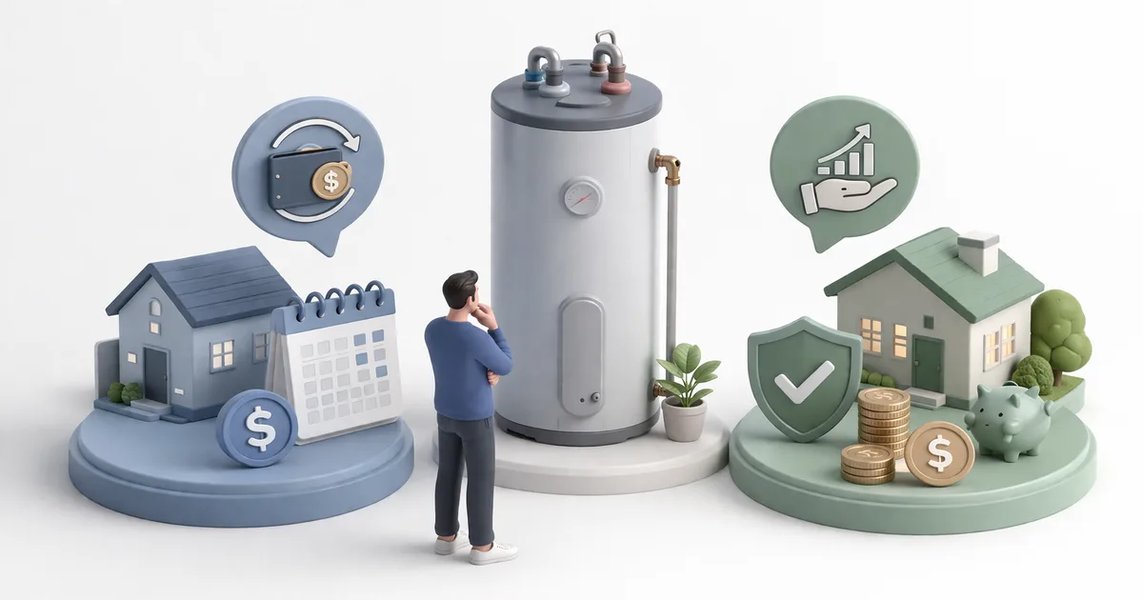
Right now, roughly 2 million Ontario households are paying $30 to $50 per month to rent a piece of equipment that costs $1,200 to $1,800 to buy outright. Over 15 years, that rental adds up to $5,400 to $9,000. For a metal cylinder that heats water.
If someone offered you a toaster for $3 per month, forever, you'd laugh. But when the toaster is six feet tall and bolted to your basement wall, suddenly the math gets fuzzy and the monthly payment seems reasonable.
It's not. For most Ottawa homeowners, renting a hot water tank is one of the worst financial decisions hiding in plain sight. But "most" isn't "all," and there are genuine situations where renting makes sense. Here's how to figure out which camp you're in.
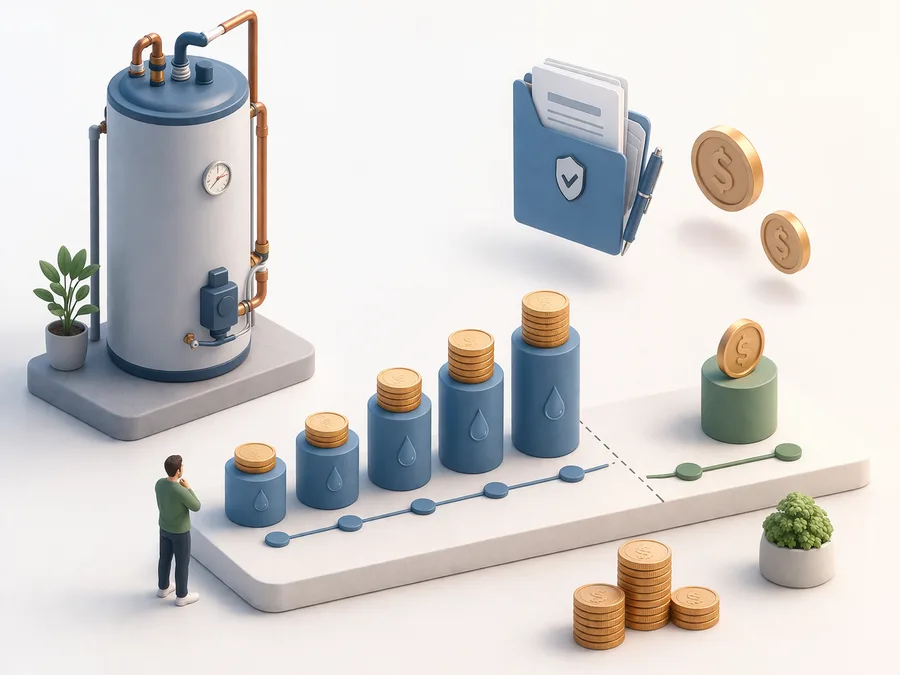
The Rental Math: Showing the Work
A standard 50-gallon gas water heater costs $1,200 to $1,800 to purchase and install. The tank itself is $600 to $900. Installation labour and parts run another $600 to $900. A licensed plumber in Ottawa can typically do the job in half a day.
A rental on that same tank costs $30 to $50 per month. Let's use $35, which is on the conservative end.
- Year 1: $420 in rental fees. You could have owned the tank for $1,500.
- Year 3: $1,260 in rental fees. You've now paid nearly the purchase price and own nothing.
- Year 5: $2,100. You've overpaid by $600 and still don't own it.
- Year 10: $4,200. You could have bought two tanks.
- Year 15: $6,300. The average tank lifespan is 8 to 12 years. You've paid for the tank four times over, replaced it once on the rental company's dime, and still own nothing.
Even accounting for one free replacement (which the rental company provides), you're still out $3,000 to $4,000 more than you would have spent buying and maintaining your own tanks over the same period.
The real cost of "free" maintenance: Rental companies advertise that repairs are included. In practice, a well-maintained water heater needs almost no repairs during its lifespan. The most common maintenance task is flushing the tank annually, which takes 20 minutes and costs nothing. The "included maintenance" benefit is worth maybe $200 over the life of the tank.
Why Rentals Became So Common in Ontario
Ontario's hot water tank rental industry is unlike anything in the rest of Canada. In British Columbia, Alberta, and Quebec, virtually everyone owns their water heater. In Ontario, roughly 40% of households rent. How did this happen?
It started with natural gas utilities in the 1950s and 1960s. When natural gas service expanded across southern Ontario, utilities bundled water heater rentals with gas hookups to encourage adoption. The rental fee was small, it appeared as a line item on your gas bill, and homeowners never thought twice about it.
Over the decades, third-party companies acquired these rental portfolios. Enercare (formerly Direct Energy) and Reliance Home Comfort became the dominant players. The business model is straightforward: charge a monthly fee that vastly exceeds the cost of providing the equipment, rely on consumer inertia to keep people paying, and make the buyout process just complicated enough that most people don't bother.
In 2014, the Competition Bureau of Canada fined Reliance Home Comfort $5 million for anti-competitive practices related to their door-to-door water heater rental sales. The investigation found that Reliance representatives had swapped out competitors' equipment without proper authorization and used misleading contract terms. The fine was a signal that regulators recognized the industry's problems.
How to Check If You're Renting
Surprisingly, many Ottawa homeowners don't actually know whether they own or rent their hot water tank. Here's how to find out.
Check your Enbridge gas bill. If there's a line item for "water heater rental" or "equipment rental," you're renting. The charge will typically appear as a separate section from your gas usage charges.
Look at the tank itself. Rental tanks usually have a sticker from the rental company (Enercare, Reliance, Enbridge) with an account number. If the tank has no sticker and you bought the home, check your purchase agreement or home inspection report.
Call the rental company. If you see a charge on your bill, call the number listed and ask for your account details, including your current monthly rate, contract terms, and buyout price. Write these numbers down. You'll need them.
Your Exit Strategy
You've confirmed you're renting. You've done the math. You want out. Here are your options, from simplest to most involved.
Option 1: Buy Out the Contract
Call the rental company and ask for the buyout price. This is the amount you'd pay to own the existing tank outright and end the rental agreement.
Here's the thing most people don't know: the first number they give you is negotiable. Rental companies know that a customer who calls asking about a buyout is a customer about to leave. They'd rather get some money than lose the revenue stream entirely.
If the tank is more than 5 years old, push back on the buyout price. A 7-year-old tank has maybe 3 to 5 years of useful life left. You shouldn't pay more than the depreciated value. Start by offering 50% of their asking price and negotiate from there.
Option 2: Return the Tank and Buy Your Own
This is the cleanest break. You get quotes from local plumbers for a new tank installation, schedule the install, then call the rental company to schedule a pickup of the old unit. Most companies will remove the tank at no charge since they want their equipment back.
Timing matters here. Get your plumber lined up first. You don't want a gap where you have no hot water. Many plumbers can remove the rental tank and install your new one in the same visit.
Option 3: The 10-Day Cooling-Off Period
If you signed a rental agreement through a door-to-door salesperson, Ontario's Consumer Protection Act gives you a 10-day cooling-off period to cancel without penalty. This applies to contracts signed at your home, not contracts you initiated by calling the company yourself.
If a salesperson recently convinced you to "upgrade" your rental to a new contract, and it's been fewer than 10 days, you can cancel in writing and return to your previous arrangement or exit entirely.
Option 4: You Bought a Home with a Rental Tank
This catches a lot of Ottawa homebuyers off guard. When you purchase a home with a rented water heater, you inherit the rental contract. It's buried in the purchase agreement, usually in the chattels section. Your real estate lawyer should have flagged it, but many don't highlight it as a concern because the monthly cost seems small.
You can still buy out or return the tank using Options 1 or 2 above. The contract doesn't lock you in forever. Review the terms for any early termination fees, which vary by provider and contract age.
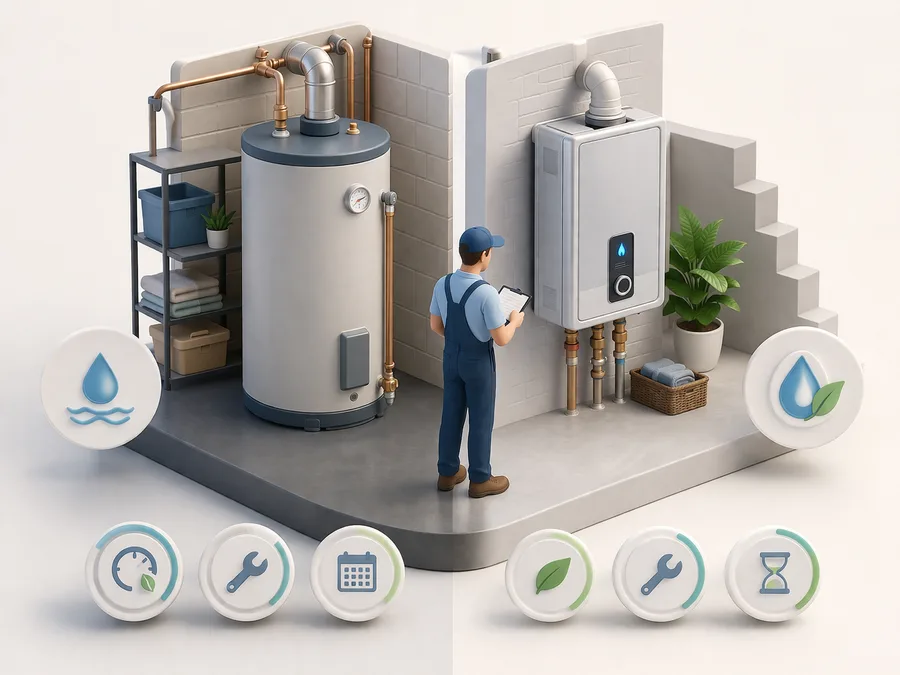
Tankless Water Heaters: The Third Option
While you're evaluating your options, it's worth considering tankless (on-demand) water heaters. They cost more upfront but change the long-term economics significantly.
Upfront cost: $2,500 to $4,500 installed, depending on the unit and whether your gas line needs upgrading. Navien and Rinnai are the most common brands in the Ottawa market.
Lifespan: 15 to 20 years, compared to 8 to 12 for a tank. This longer lifespan is a major factor in the cost calculation.
Operating cost: Tankless units only heat water when you turn on the tap, so they use 15 to 30% less energy than a tank that keeps 50 gallons hot 24 hours a day. On a typical Ottawa gas bill, that's $150 to $300 per year in savings.
The catch: Tankless units require annual descaling in areas with hard water, which Ottawa has. Budget $150 to $200 per year for professional maintenance, or $30 for a DIY descaling kit and 45 minutes of your time.
Over 15 years, a tankless unit at $4,000 installed plus $150/year in maintenance comes to $6,250. A tank at $1,500 installed, replaced once at year 10 for another $1,500, totals $3,000. Tankless costs more in absolute terms, but the energy savings ($150 to $300 per year) close the gap significantly, and you get continuous hot water without ever running out mid-shower.
When Renting Actually Makes Sense
This article has been fairly critical of rentals, so in fairness, here are the situations where renting is a reasonable choice.
You're selling the home within 2 to 3 years. If you're planning to move soon, the upfront cost of a new water heater won't pay for itself before you leave. The rental cost for 2 years is $720 to $1,200, well below the cost of a new tank and installation. Keep the rental and focus your money on renovations that add resale value.
The rental includes a brand-new, high-efficiency unit. Some newer rental agreements come with high-efficiency condensing tanks or tankless units that would cost $3,000+ to buy. If the rental rate is $40/month for a unit worth $3,500, the breakeven point is about 7 years. If you plan to stay fewer than 7 years, the rental isn't terrible.
You genuinely cannot afford the upfront cost right now. A $1,500 expense is significant for many households. If the choice is between renting a water heater and going into credit card debt to buy one, the rental is the less damaging option. But make a plan to buy when you can.
The Bottom Line
Here's the decision framework in plain terms:
- If you plan to stay in your home for 4+ years: Buy your own tank. You'll break even in 3 to 4 years and save thousands after that.
- If you plan to move within 2 to 3 years: Keep the rental. The math doesn't work in your favour for a short stay.
- If your rental tank is already old (8+ years): Wait for it to fail, then buy your own replacement instead of accepting the rental company's "free upgrade" (which resets your contract to a new 10 to 15 year term).
- If you want the best long-term value and have the budget: Go tankless. Higher upfront cost, but the longest lifespan and lowest operating cost over 15 to 20 years.
Renting a hot water tank is like leasing a toaster. At some point you realize you've paid for six toasters and don't own any of them. The difference is that a toaster costs $40. A hot water tank costs thousands over the life of a rental contract.
Check your Enbridge bill this month. If you see that rental charge, run the numbers for your situation. For most Ottawa homeowners, the answer is clear: buy the tank, own the tank, and stop paying rent on a metal cylinder in your basement.