
It's 6 AM on a Tuesday in February. The furnace didn't kick on last night. You know this because you can see your breath in the bedroom. Your phone says it's -28 outside. The dog is looking at you like this is somehow your fault.
This is the wrong time to start researching furnace maintenance. The right time was September. But since you're here, this guide covers everything: scheduled maintenance, the repairs worth doing, the ones that aren't, the scams to watch for, and the decision framework for when to stop repairing and start replacing.
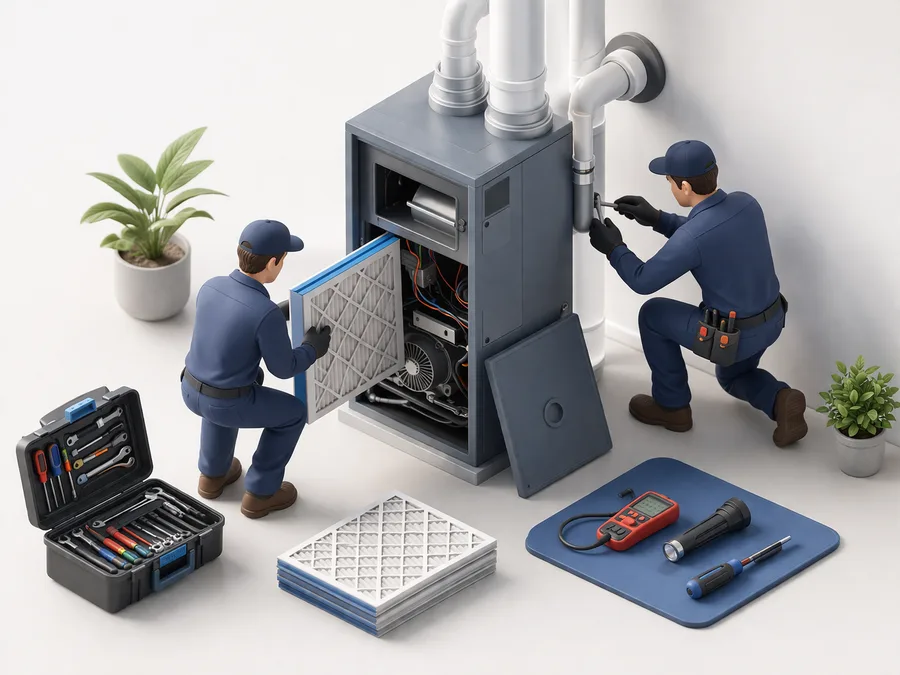
Annual Service: Book in September, Thank Yourself in January
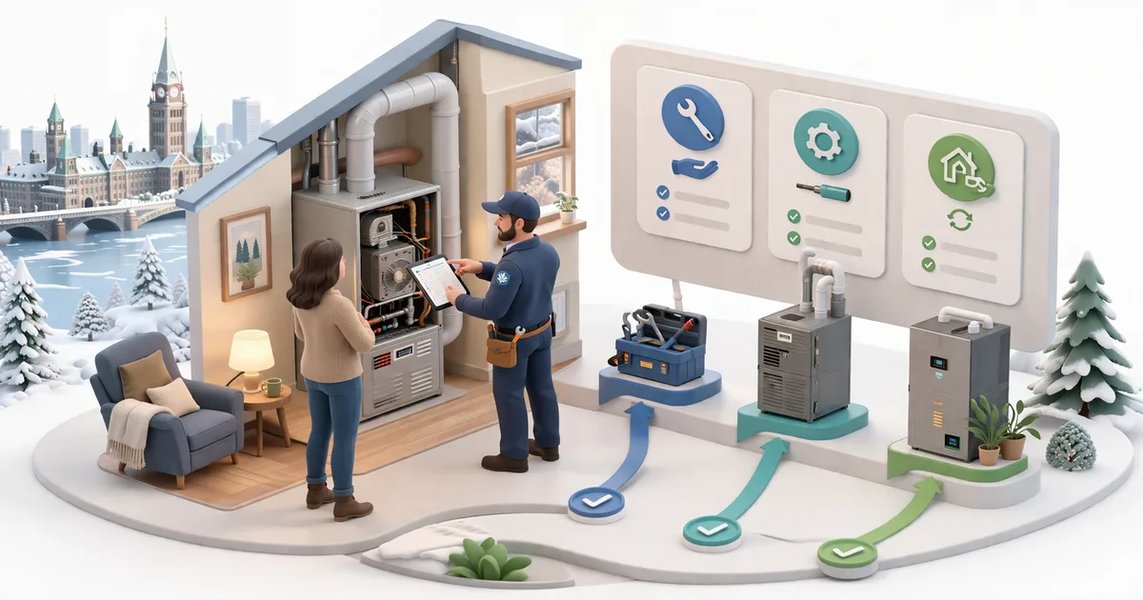
A furnace tune-up costs $150 to $250 in Ottawa. It takes about an hour. An HVAC technician will inspect the heat exchanger, clean the burners, check the ignition system, test safety controls, inspect the flue and venting, replace the air filter, and verify that everything is operating within spec.
Why September? Because by October, every HVAC company in Ottawa is booked solid with emergency calls from people whose furnaces failed on the first cold night. September bookings are easier to schedule, sometimes cheaper, and catch problems before they become emergencies.
The $150 you spend on a tune-up can prevent:
- A $500 emergency weekend service call
- A cracked heat exchanger that goes undetected (carbon monoxide risk)
- A failed ignitor that leaves you without heat on the coldest night of the year
- Reduced efficiency that costs you $200-$400 in extra gas bills over the winter
Skip a tune-up and you'll probably be fine. Skip five years of tune-ups and you're gambling with both comfort and safety. Furnaces are mechanical systems. They wear. Regular service catches wear before it becomes failure.
Pro tip: Many Ottawa HVAC companies offer maintenance plans ($15-$25/month) that include annual tune-ups, priority emergency service, and discounts on repairs. If your furnace is over 10 years old, these plans often pay for themselves with a single avoided emergency call.
The Air Intake PSA: Ottawa's Most Shared Winter Tip
Every winter, without fail, Ottawa's community forums light up with the same post: "Furnace stopped working. Technician came, charged me $200, and cleared the snow from the outside pipe."
Modern high-efficiency furnaces have two PVC pipes that exit through your exterior wall. One exhausts combustion gases. The other draws in fresh air for combustion. When snow, ice, or freezing rain blocks that intake pipe, the furnace detects restricted airflow and shuts down as a safety precaution.
It's doing exactly what it should do. The fix takes thirty seconds.
What to Do After Every Major Snowfall
- Find your furnace intake and exhaust pipes on the exterior of your house (usually white PVC, 2-3 inches diameter, on the side wall)
- Clear any snow, ice, or debris from both pipes. Maintain at least 12 inches of clearance around each pipe.
- While you're there, check that nothing has built up a nest or web inside the pipe opening (spring issue more than winter, but worth checking)
If your furnace stops working after a snowstorm, check the pipes before you call for service. You'll either save yourself a service call or be able to tell the technician you've already ruled it out.
If the pipes are clear and the furnace still isn't running, check your thermostat batteries (the most embarrassing service call in HVAC) and your furnace's power switch (usually a light switch on or near the unit that gets bumped accidentally). These three checks take two minutes total and eliminate the most common causes of "furnace not working" calls.
The False Condemnation Scam: Get a Second Opinion
This needs its own section because it happens regularly in Ottawa and costs homeowners thousands of dollars.
The scenario: You call an HVAC company for a repair. The technician inspects your furnace and tells you there are "cracks in the heat exchanger." They recommend immediate replacement, usually quoting $5,000 to $7,500 for a new furnace. They might tell you it's a carbon monoxide risk and that you should not run the furnace until it's replaced.
Sometimes this is legitimate. Heat exchangers do crack, especially in furnaces over 15-20 years old, and a cracked heat exchanger is genuinely dangerous. Carbon monoxide is odourless and kills people.
But sometimes the furnace is fine. The "cracks" are normal surface oxidation, cosmetic discolouration, or simply don't exist. The technician may be working on commission, or the company may have sales targets for new installations.
How do you protect yourself?
The Second Opinion Protocol
- Don't sign anything on the spot. No legitimate safety concern requires you to commit to a $5,000+ purchase within the hour.
- Ask to see the crack. Some technicians will show you with a camera. If they refuse or can't point to the specific location, that's a flag.
- Get a second opinion from an independent HVAC company. Tell them you were told your heat exchanger is cracked and you want a verification inspection. Pay for the second service call ($150-$250). It's worth it.
- If both agree the heat exchanger is cracked, replace the furnace. This is not a repair situation. Heat exchanger replacement costs nearly as much as a new furnace.
- Install CO detectors if you haven't already. Every floor, near bedrooms. This is non-negotiable regardless of furnace age.
Are you going to feel foolish calling a second company to check? Maybe. Are you going to feel more foolish spending $6,000 to replace a furnace that had five good years left? Definitely.
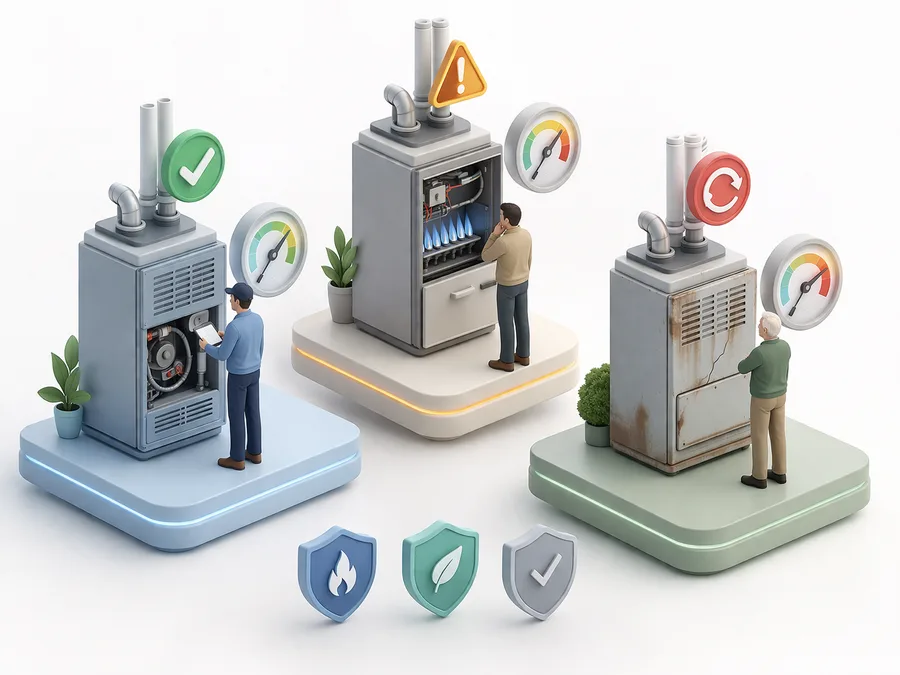
Repair vs. Replace: The Decision Framework
Here's the framework Ottawa HVAC technicians generally agree on. It's not complicated, but it requires knowing your furnace's age (check the manufacturer sticker inside the front panel, or look up the serial number online).
Repair
- Furnace is under 10 years old and the repair is under $500
- Furnace is 10-15 years old and the repair is under $300
- It's the first significant repair (no pattern of recurring issues)
Consider Replacing
- Furnace is 15-20 years old and the repair is over $1,000
- You've had two or more repairs in the past two years
- Your heating bills have increased noticeably despite similar usage
- The repair is to a major component: heat exchanger, blower motor (second failure), or control board
Replace
- Furnace is over 20 years old, regardless of repair cost
- Heat exchanger is cracked (confirmed by two opinions)
- Furnace no longer meets code (some older models were recalled or have known safety issues)
A good rule of thumb: if the repair costs more than 50% of a new furnace and the unit is over 15 years old, replace it. You're buying years of reliability, better efficiency (a 96% AFUE furnace uses meaningfully less gas than the 80% unit it's replacing), and a fresh warranty.
When the Furnace Dies: Emergency Steps
If your furnace fails during an Ottawa cold snap and a technician can't come immediately:
- Space heaters: Electric space heaters can keep one or two rooms livable. Never leave them unattended. Never use a gas stove or oven for heating (carbon monoxide risk).
- Close off rooms you don't need. Concentrate people and heating in the smallest comfortable space.
- Open cabinet doors under kitchen and bathroom sinks. Pipes in exterior walls are the first to freeze.
- Let faucets drip. A slow drip in the coldest bathroom prevents pipe freezing.
- Know your threshold. If the indoor temperature drops below 10C and you can't get service, consider staying elsewhere. Frozen pipes cause more damage than the furnace repair itself.
Pro tip: If you have an older furnace, keep a portable electric space heater rated for at least 1,500 watts stored and ready. Not as a heating strategy, but as a 12-24 hour bridge while you wait for emergency service. A $50 space heater can prevent $5,000 in frozen pipe damage.
Carbon Monoxide: The Non-Negotiable Safety Check
Every year in Canada, over 300 people are hospitalized for carbon monoxide poisoning, and roughly 50 die from it. Furnaces are one of the primary sources of residential CO exposure, particularly older units with deteriorating heat exchangers.
This is non-negotiable, regardless of furnace age:
- CO detectors on every floor, especially near bedrooms
- Test detectors monthly (press the test button)
- Replace detectors every 5-7 years (the sensor degrades regardless of battery status)
- Annual furnace inspection includes CO testing (another reason not to skip it)
If your CO detector goes off: leave the house immediately, call 911 from outside, and do not re-enter until cleared by emergency services. CO symptoms (headache, dizziness, nausea) mimic the flu. People dismiss them, especially in flu season, which overlaps perfectly with furnace season.
Oil Furnaces in Rural Ottawa
If you're in Carp, Manotick, Navan, Richmond, or other areas outside the natural gas service area, your home may still run on oil heat. Oil furnaces require the same annual service attention, plus oil tank inspection (check for rust, leaks, and the condition of the fuel line). Oil tank replacement ($2,000-$4,000) is a cost gas homeowners don't face, but neglecting a deteriorating tank risks a fuel spill that can cost $20,000+ in environmental cleanup.
If you're on oil and considering switching to a heat pump, the financial case is even stronger than gas-to-heat-pump conversions. Oil is the most expensive common heating fuel in Ontario, and federal rebate programs specifically target oil-to-heat-pump conversions with the largest incentives (up to $10,000).
The September Conversation
Here's how proactive Ottawa homeowners handle furnace season: in September, before the rush, they book a tune-up. During the tune-up, they ask the technician one question: "Based on what you're seeing, how many more winters do you think this furnace has?"
HVAC technicians will give you an honest answer. They see dozens of furnaces a week. They know what a unit on its last legs looks like versus one with years of life left. That single conversation, with a technician who's looking at your specific unit, is worth more than any general guide on the internet.
If the answer is "start planning," you have months to get quotes, compare options, and schedule installation before the first cold night. If the answer is "this thing is solid," you go into winter confident.
Either way, you found out in September. Not in January. Not at 6 AM. Not while you can see your breath.